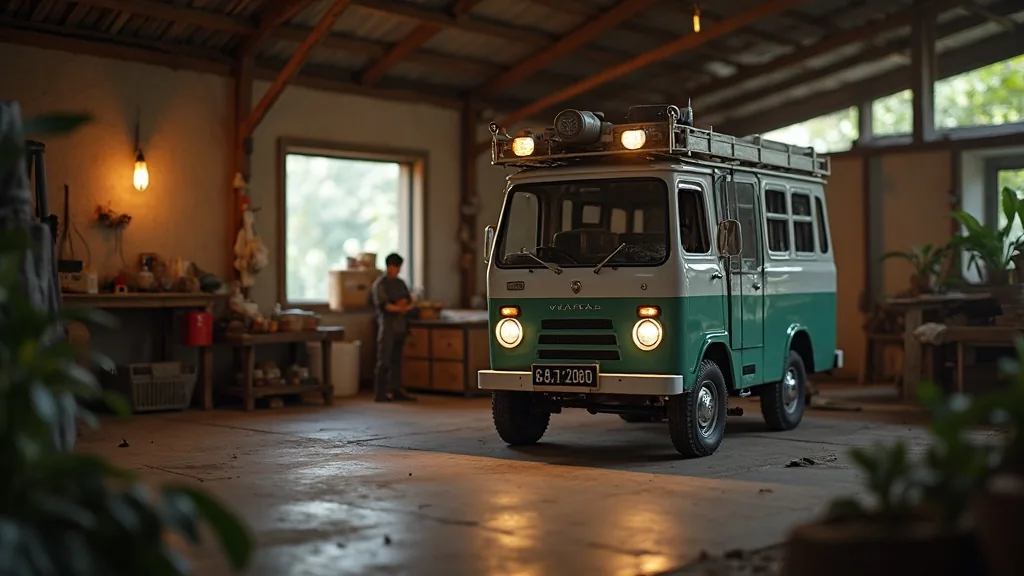
A Wae Rebo car transfer is a private vehicle-with-driver charter from Labuan Bajo to the trailhead villages of Denge or Dintor, covering roughly 130–150 km in approximately 4.5–6 hours depending on road and weather conditions. From the trailhead you continue on foot: a 2.5–3 hour uphill trek through forest and coffee gardens to Wae Rebo, the mountain village famous for its seven cone-shaped Mbaru Niang houses. Komodo Transport runs this route as a 2-day/1-night or 3-day/2-night charter with an SUV or high-clearance vehicle, quoted per vehicle in USD via WhatsApp.
What does a Wae Rebo car transfer actually include?
The charter covers the ground half of the journey. As of 2026 a standard package includes:
- Private vehicle with driver from your Labuan Bajo hotel, villa, harbour or airport area to Denge (or Dintor, depending on where your homestay is booked).
- Driver waiting time for the full duration of your trek and overnight stay in the village.
- Return leg to Labuan Bajo, or onward continuation east toward Ruteng, Bajawa or Ende.
- Fuel, driver meals and driver accommodation in the trailhead area, unless stated otherwise in your quote.
- Optional stops — the Lembor rice terraces and the Dintor lookout over Mules Island.
Not included: the village contribution and homestay fee collected directly by Wae Rebo, a local porter or guide, and your own meals. These are paid in cash on the ground and set by the village itself, so we quote them as estimates only.
Why is an SUV or high-clearance vehicle strongly recommended?
The first two-thirds of the drive — Labuan Bajo through Lembor toward the south coast — is mostly sealed asphalt. The final stretch toward Dintor and Denge is where the road changes character:
- Broken and unsealed sections. Parts of the road are patched gravel, exposed rock and eroded concrete. A low bumper and shallow ground clearance will scrape.
- Steep gradients and tight hairpins. The climb toward Denge is steep enough that a fully loaded small car with a weak engine struggles, especially in second gear on loose surface.
- Rain damage and landslide scars. Even in dry season you will meet ruts, washouts and narrow single-lane passes carved by earlier rain.
- Long remote stretch. No fuel stations, no workshops and patchy mobile signal on the last leg. High clearance is a safety decision here, not a comfort upgrade.
For this reason we normally deploy a Toyota Fortuner or an Innova Reborn on the Wae Rebo run. Vans and minibuses can reach Dintor in good conditions but are not our first recommendation for the final climb, and we will say so honestly rather than sell you the cheaper unit.
Where do the driver and vehicle wait during the trek?
Vehicles cannot reach Wae Rebo — the village is only accessible on foot. The standard logistics are:
- The driver takes you to the trailhead at Wae Lomba, just above Denge, where there is a registration point and parking area.
- You trek up. The vehicle stays parked at the trailhead or returns down to Denge/Dintor.
- The driver overnights in Denge or Dintor, usually in a local homestay, and returns to the trailhead to meet you the following morning.
- You descend after breakfast in the village, meet the driver, and depart. Most travellers are back in Labuan Bajo by late afternoon.
Because the driver is committed for two days, Wae Rebo is quoted as a multi-day charter, not a point-to-point run.
When is the best time to go to Wae Rebo?
The dry season — broadly April to October — is the practical window. As of 2026 the road stays passable in wet season but becomes slower and more slippery, and the trek turns to mud. Depart Labuan Bajo between 05:00 and 07:00 so you start the trek in the early afternoon and reach the village before dark; the path is not lit and cloud rolls in quickly at altitude.
How should visitors behave in the village?
Wae Rebo is a living community, not an open-air museum. A few things are expected of every visitor:
- Wait at the shelter below the village and sound the wooden signal. Do not walk in unannounced.
- Join the welcome ceremony in the main ceremonial house before exploring or photographing. Your guide will present you to the elder.
- Dress modestly, keep voices low, and remove hats inside the houses.
- Ask before photographing people, and ask before flying any drone — permission is not automatic.
- Carry cash in small notes; there is no ATM or card payment, and expect limited electricity hours and no reliable signal.
How much does a Wae Rebo charter cost in USD?
Indicative rates per vehicle, as of 2026:
| Vehicle | Typical group | 2D/1N indicative | 3D/2N indicative |
|---|---|---|---|
| Innova Reborn / Zenix | 2–4 guests | USD 230–300 | USD 330–420 |
| Fortuner / Pajero Sport | 2–5 guests | USD 310–400 | USD 430–540 |
| Hiace (to Dintor area) | 6–10 guests | USD 340–430 | USD 470–580 |
Disclaimer: these are indicative ranges per vehicle, not fixed prices. Final quotes depend on season, fuel cost, pickup point, road condition, number of days and whether you return to Labuan Bajo or continue east. Village contribution, homestay, local guide and your own meals are separate and paid on the ground. Every price is confirmed in writing before you commit.
How do you book?
Message us on WhatsApp with your dates, group size, luggage volume, pickup point, and whether you want a return trip or an onward continuation. We confirm availability, send a written USD quote, and reconfirm pickup time the evening before. If Wae Rebo is one leg of a bigger plan, we can fold it into a Flores overland itinerary or continue on the Labuan Bajo to Ruteng route the same morning you descend.
Frequently asked questions
How hard is the trek to Wae Rebo?
A steady 2.5–3 hour uphill walk on a forest path, roughly 6–7 km. No technical climbing, but it is continuous ascent and can be slippery. Reasonable fitness, proper shoes, water and a head torch are enough. Porters can usually be arranged in Denge.
Can I do Wae Rebo without staying overnight?
Physically yes, sensibly no. The combined driving and trekking time in one day is punishing and leaves no margin if the road is slow. The overnight stay in the Mbaru Niang is also the part travellers remember most.
Is a 4WD required, or is high clearance enough?
In dry season a high-clearance 2WD SUV is generally sufficient. In wet season or after heavy rain, 4WD is the safer call. We advise honestly based on conditions in the week of travel rather than promising a guaranteed road state.
Can the same vehicle continue to Bajawa or Ende afterwards?
Yes. Many guests treat Wae Rebo as the first leg of a longer eastward run. Tell us your final destination when you request the quote so we assign the right vehicle and driver from the start.
Ready to plan your Wae Rebo trip?
Komodo Transport is operated under Komodo Luxury, part of Juara Holding Group — operating from Bali across Indonesia since 2015. Send your dates and group size for a clear USD quote, plus honest advice on timing and road condition.
WhatsApp: +62 811-3810-5742 | Email: sales@komodoluxury.com